Reimagining News for Gen Z Attention and Trust
From bland, static news articles to a more engaging experience
TIMELINE
August - October 2025
ROLE
UX Designer
CLIENT
Extern x NewsCorp
Project Overview
Traditional news apps are perceived as outdated, leading to low engagement and reduced trust as their experiences often feel static, text-heavy. Gen Z increasingly turns to social media platforms for news because they offer personalized, interactive, and visually engaging content.
"How might we redesign news apps to better engage Gen Z while maintaining trust and credibility?"
Approach
The project was divided into three milestones, each aligned with a core phase of my design process
Milestone 1: Discover
Gain a deep understanding of modern
news consumption to inform design
decisions for the future platform.
Milestone 2: Define
Understand Gen Z users to set a clear
design direction to guide solution
development.
Milestone 3: Desgin
Develop and prototype a reimagined
platform aimed at solving these
engagement and trust issues.
Why Gen Z Users Overlook Modern News Apps
Traditional news apps have long been the primary source for staying informed. Today, however, the rise of social media and personalized feeds is changing the way Gen Z consumes news. This new generation is turning away from conventional platforms, as news apps often feel outdated, text-heavy, and disengaging.
User Research
It’s important to fully understand why Gen Z users tend to avoid traditional news apps and prefer social media.
I created a short survey in which 20+ students responded to.
My goals were to:
Understand why Gen Z users use social media
Understand what users care the most when using social media/news apps
Uncover pain points of modern news apps and product opportunities
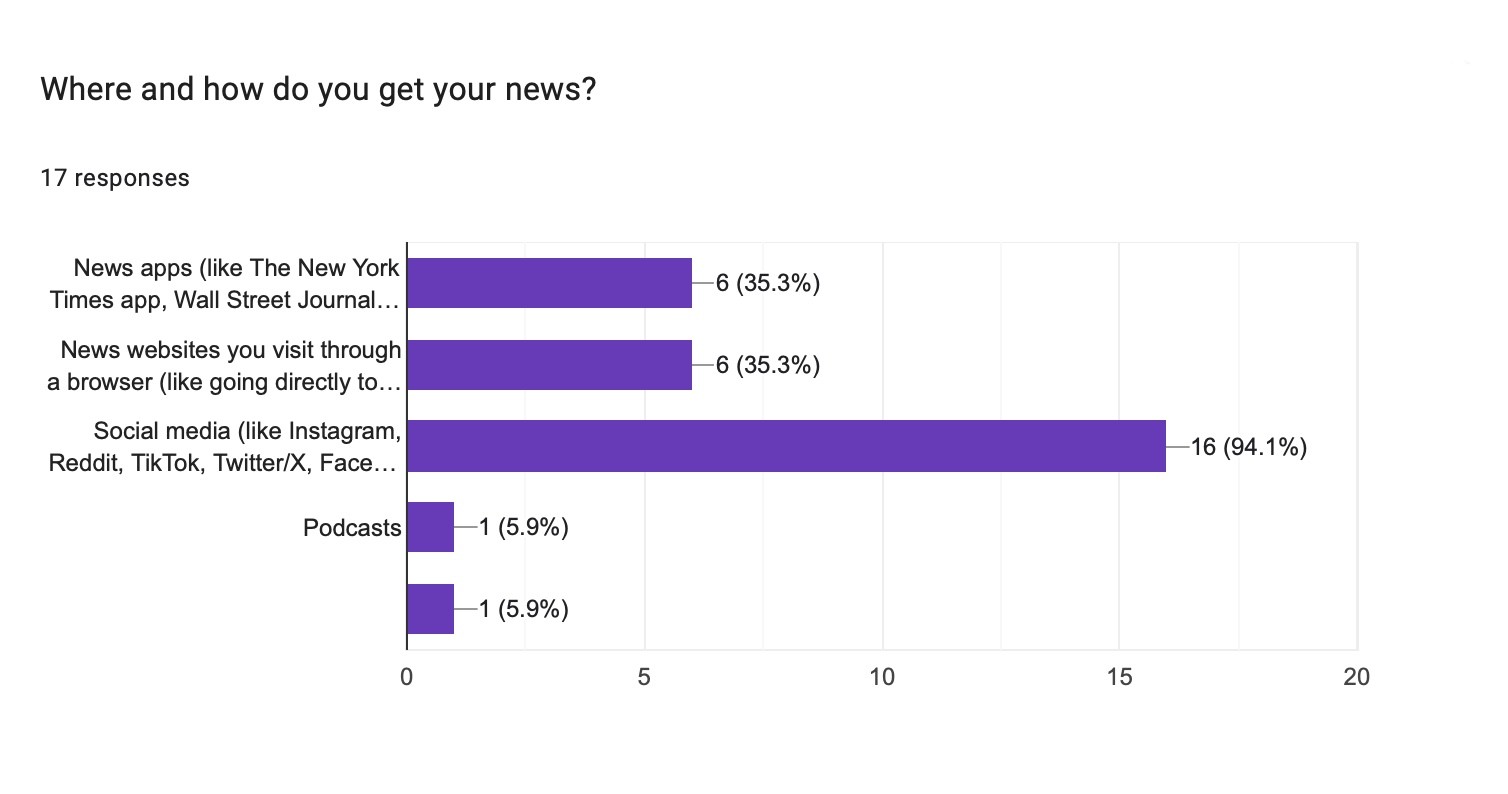
94% say that social media is their main source of news
Key Findings
News Fails to Stick
Only 30% report actively reading or watching the news daily, while the rest consume it less than once a week, citing that news feels boring, overwhelming, or hard to follow.
No Credibility
60% of people say they don’t trust news sources, citing bias and other transparency issues.
Competitive Analysis
Now we understand what’s missing in traditional news apps, what features keep Gen Z engaged on social media, and how we can apply those insights to future news platforms.
Tiktok
The default feed is the For You Page (FYP), which uses AI to personalize content even if you don’t follow anyone.
TikTok’s system can refine recommendations within minutes, it watches behavioral signals almost in real time to keep the feed highly engaging
Instagram blends content from people you follow with algorithm‑suggested posts.
Personalization is based on engagement with specific accounts and content types.
Instagram recently added features that let users see and tune the topics influencing their Reels recommendations
Where News Apps Fail
The problem is that social media has become the main source of news for Gen Z, thanks to AI-driven feeds that allow users to passively receive content.
Current news apps lack AI-powered personalization and modern formats, leading users to find news overwhelming, irrelevant, or untrustworthy.
Understanding the Target User Group
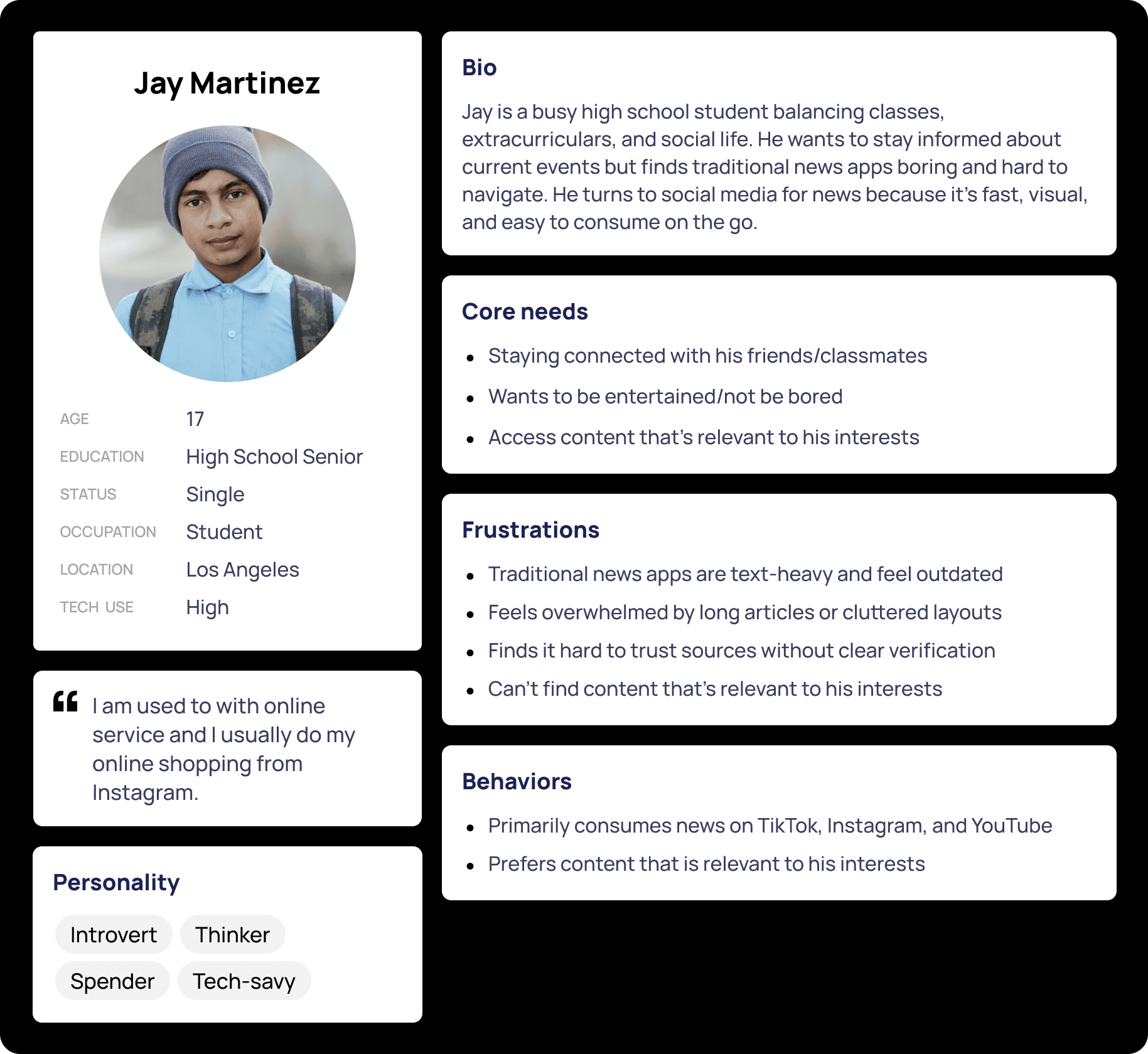
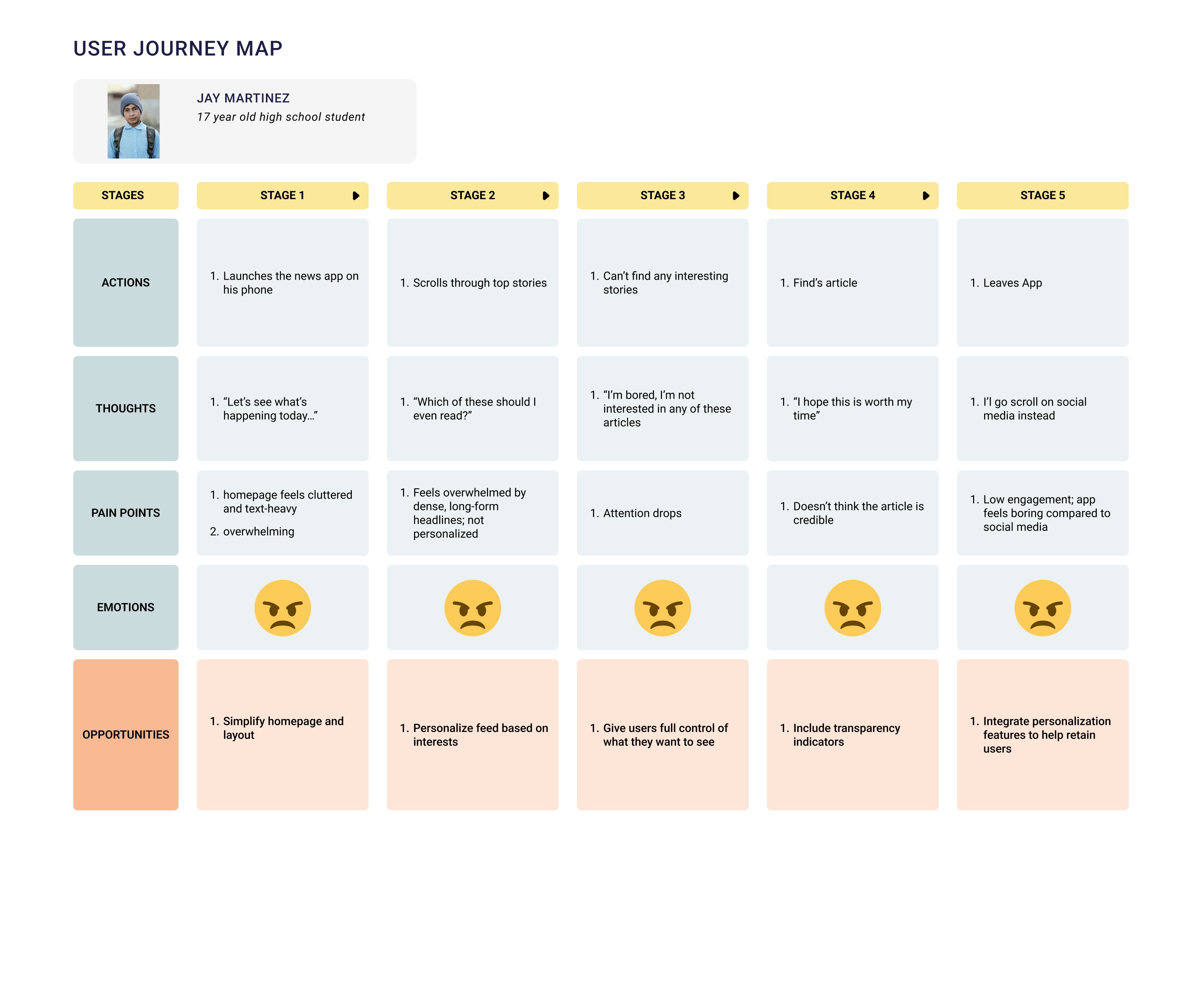
To deeply understand the target users, I like to create fictitious personas that allow me to step into their shoes and explore their needs, motivations, thoughts, and priorities.
Gaps & Opportunities
Problem: Users Are Not Seeing What They Want
Modern news apps lack AI-powered personalization, failing to deliver articles that match users’ interests, which drives them to turn to social media instead.
Solution: Incorporate AI
Personalized feeds are the future, every content app utilizes this feature. AI can analyze user behavior, preferences, and interaction patterns to curate a personalized news feed. This ensures users see content that is relevant and engaging, increasing retention and reducing the likelihood of switching to social media for news.
Problem: Lack of Trust
Many users struggle to determine which news sources are credible, leading to skepticism and disengagement. Without clear verification and transparency, users are more likely to abandon traditional news apps and rely on social media or peer-shared content, even if less reliable.
Solution: Transparency Indicators
Include clear signals of credibility, such as source verification, author credentials, publication date. These indicators help users quickly assess the reliability of content, building trust and encouraging continued engagement with the app.
Problem: Cluttered Homepage
Traditional news apps often display too many headlines, categories, and ads at once, overwhelming users and making it difficult to find relevant content.Leading to a decrease in engagement and encourages users to leave the app for simpler, more streamlined platforms like social media.
Solution: Simplified Format
Present news in a clean, easy-to-scan layout with clear headings. A simplified format allows users to quickly grasp key information, reduces cognitive load, and encourages more frequent engagement.
Exploring Solutions
By synthesizing all of my research I can now use those insights to brainstorm different features/ideas that could solve the lack of engagement problem within the app and create this elevated experience.
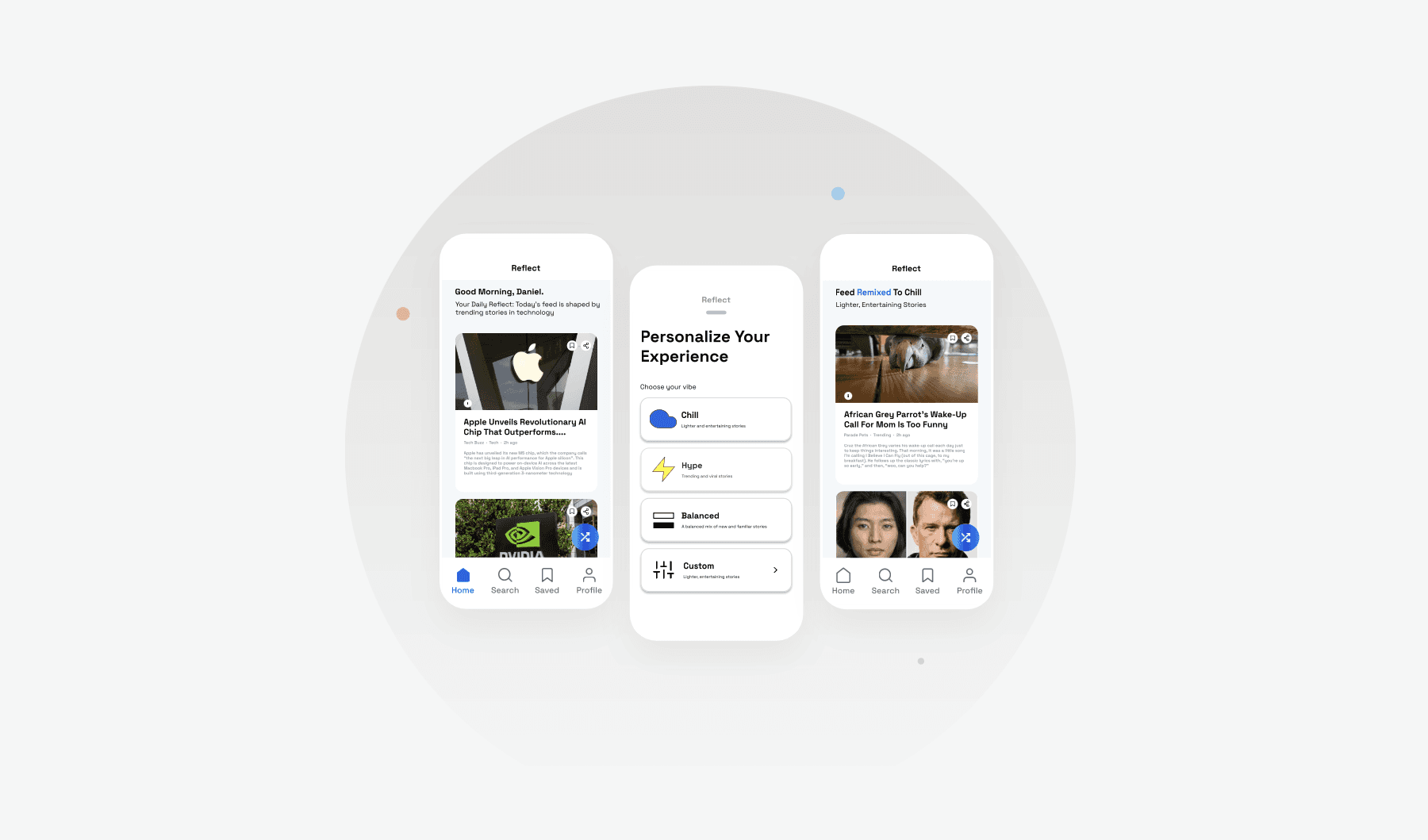
Final Prototypes
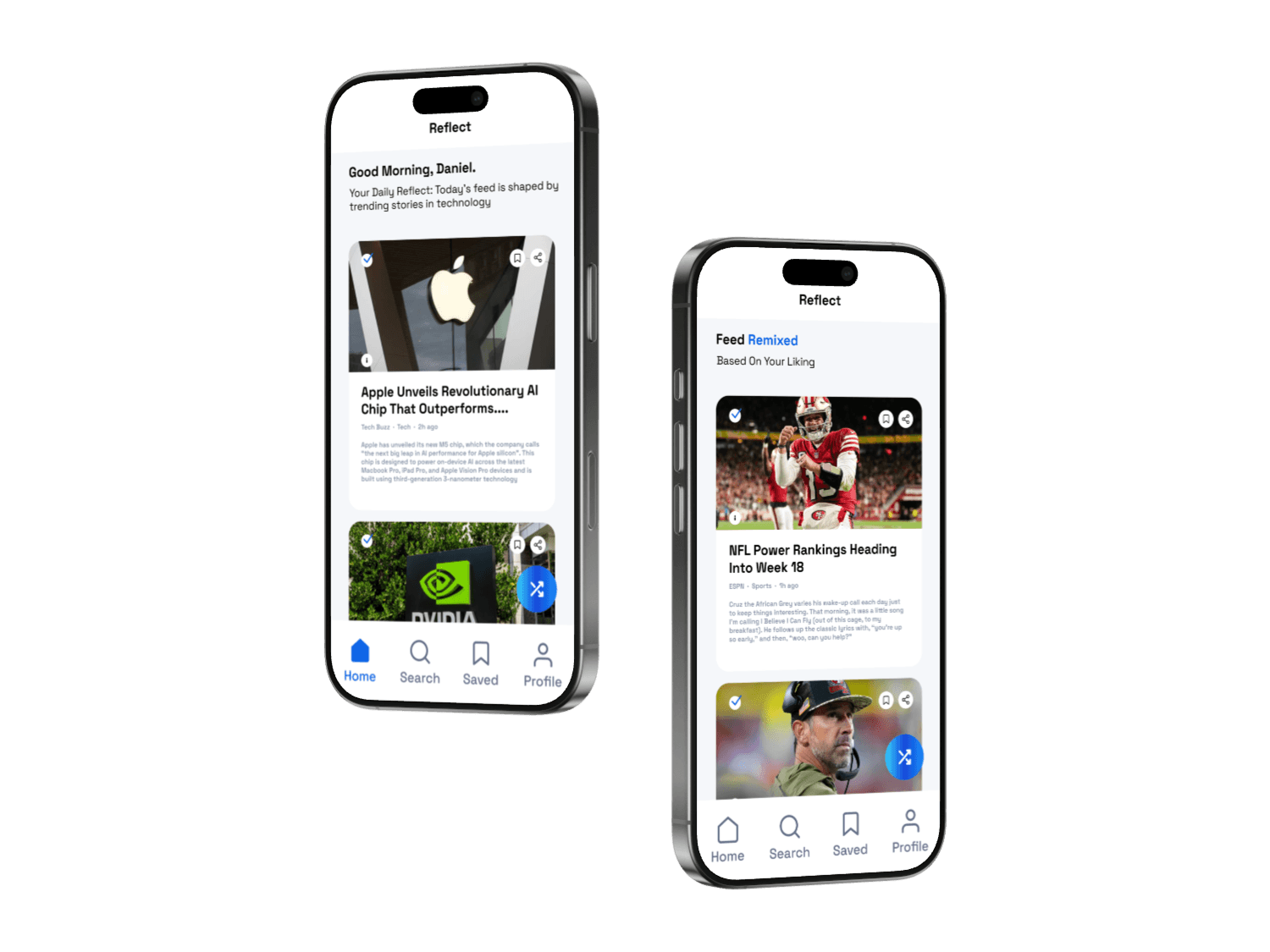
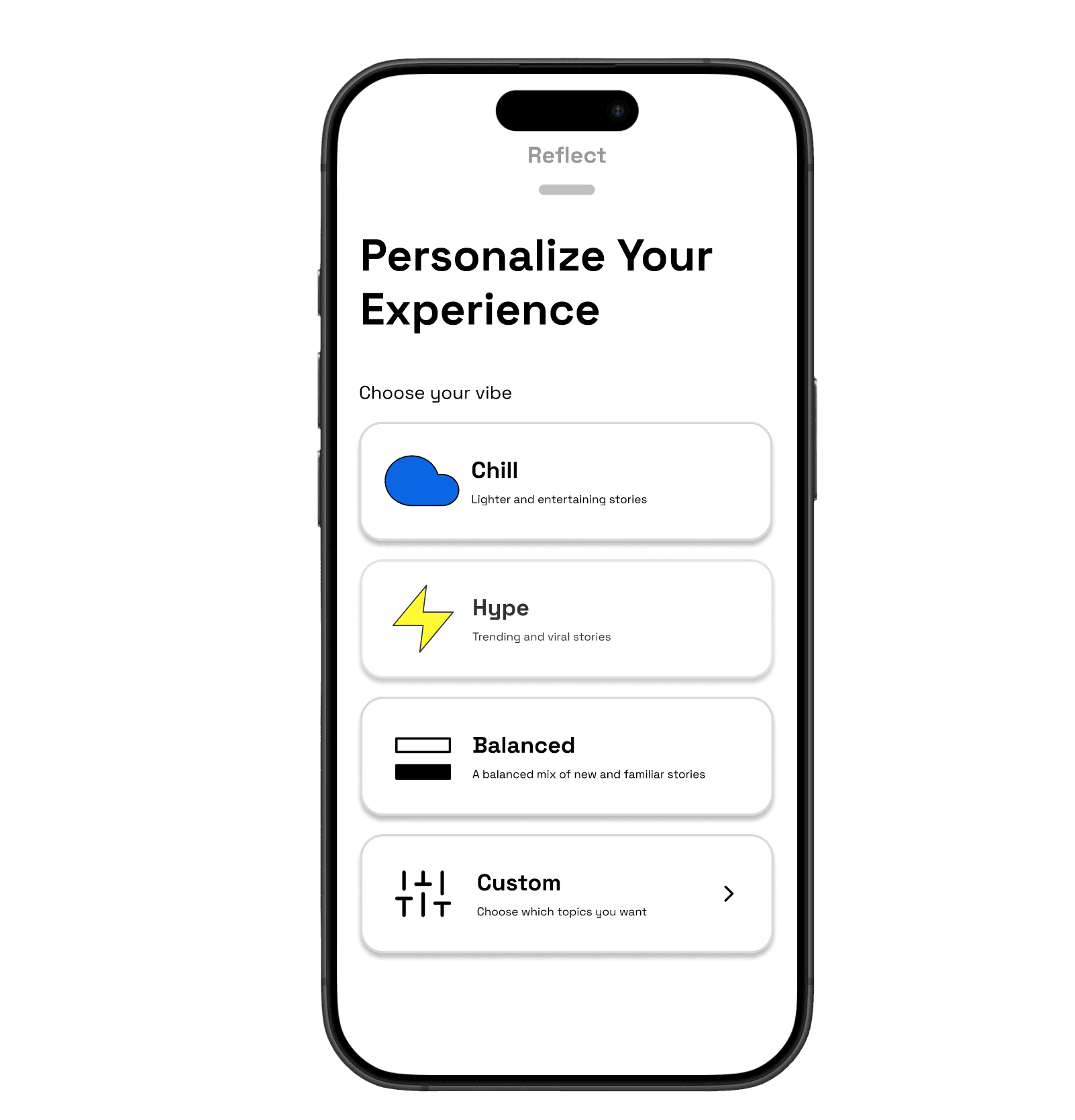
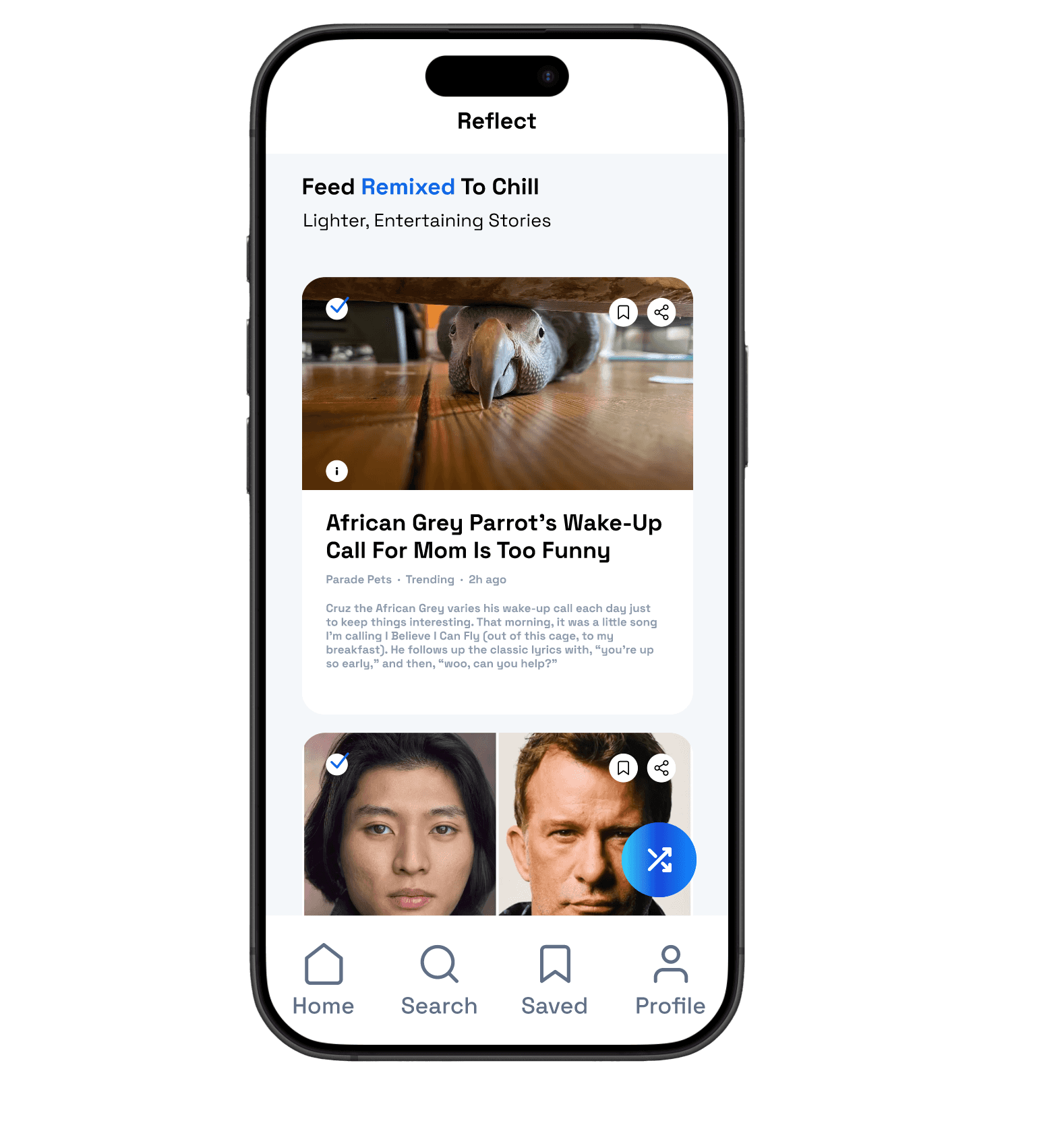
Remix Your Feed
Take control of what you see. Shuffle topics, remix stories, and customize your news feed to match your interests,anytime.
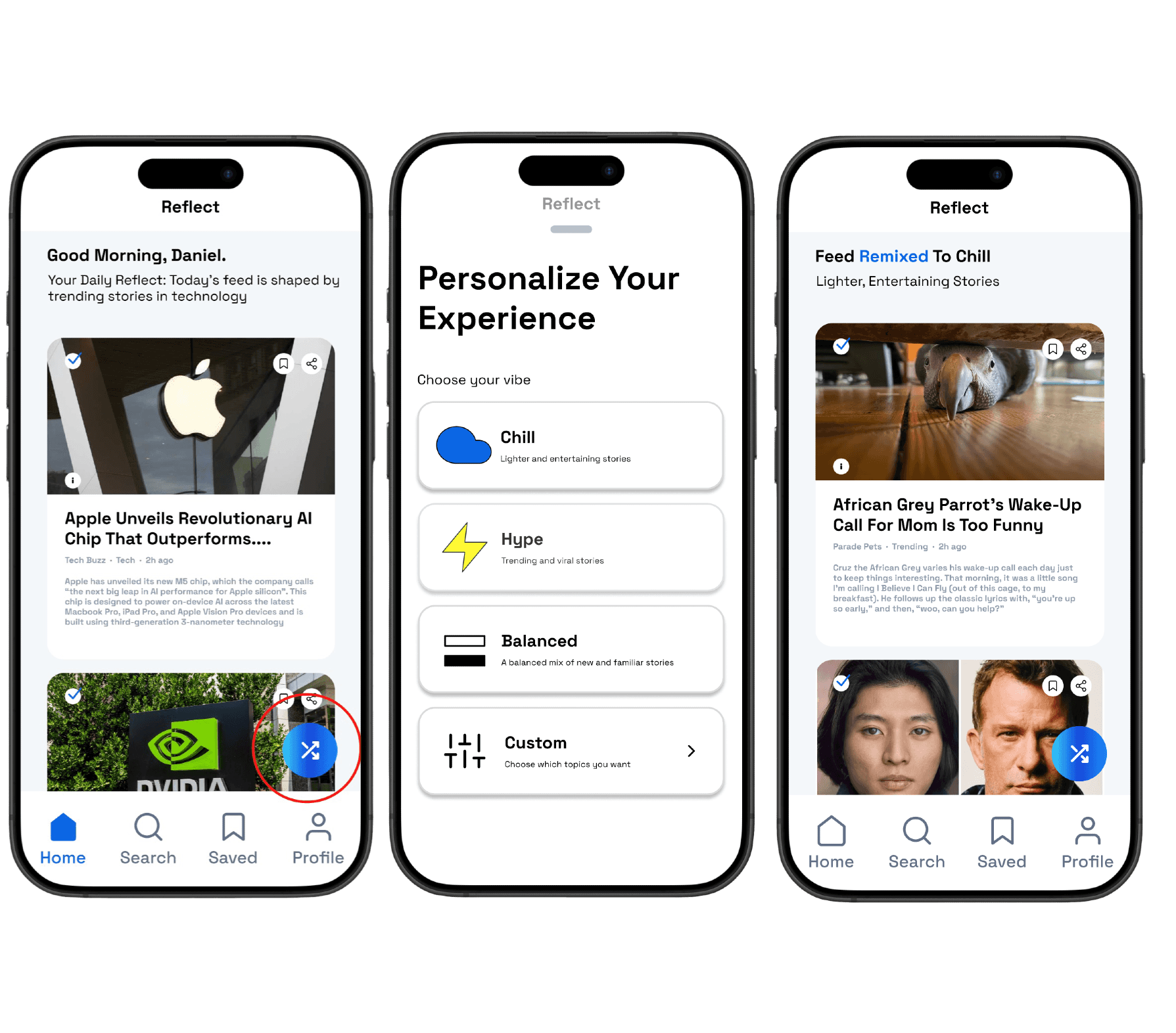
A New Reflect, Every Day
No two days are the same. Each day brings a fresh feed, thoughtfully curated based on your previous interactions and evolving interests.
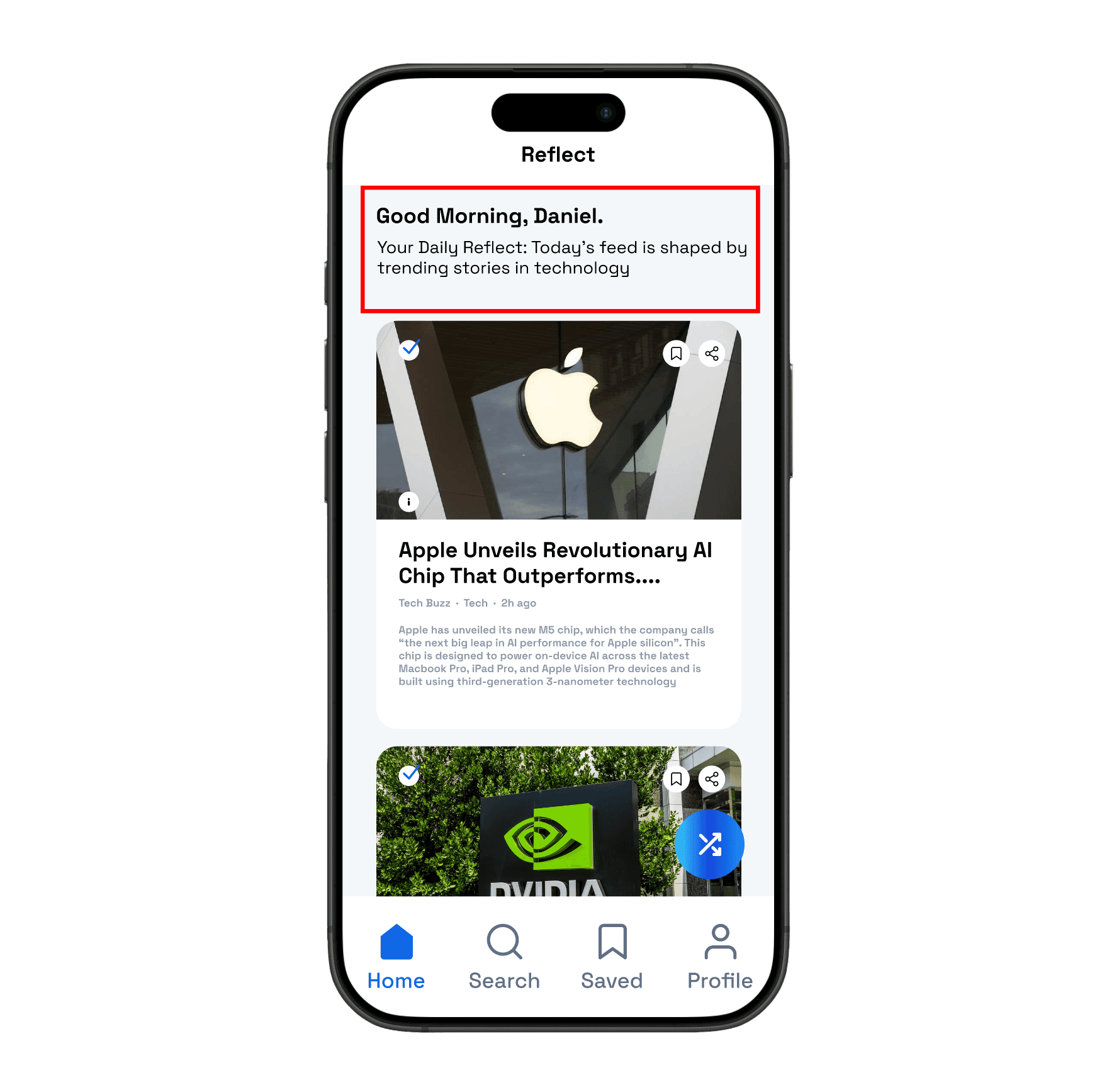
Built-In Transparency
Know why you’re seeing what you see. Trusted sources are clearly highlighted, and recommendations come with simple explanations, so you stay informed with confidence.

Limitations
Testing
Time constraints limited my ability to fully test the prototypes with users. Future iterations will focus on more testing to refine interactions, validate assumptions, and improve overall usability.
Next Steps
More User Research
Conducting additional user research, such as in-depth interviews, would help validate and contextualize survey findings. Interviews would allow for deeper exploration of user motivations, behaviors, and pain points that quantitative data alone cannot capture, leading to more informed and confident design decisions.
User Testing
Conducting usability testing with real users will help validate design choices, uncover friction points, and evaluate how effectively features like Remix, Daily Reflect, and transparency indicators support user trust and engagement. Insights from testing will guide iteration, improve clarity, and ensure the product aligns with user needs and expectations.
Lessons Learned
Aligning Design with Business Strategy
I really enjoyed this challenge because it forced me to design an experience while also keeping business goals in mind. Designing with clear strategic goals helped prioritize features, manage scope, and ensure the experience supported engagement, trust, and long-term retention.
Importance of User Research
This project reinforced the importance of grounding design decisions in user research rather than assumptions. Insights, percentages, and opinions from users helped ground design decisions and the direction of the project by providing validation.